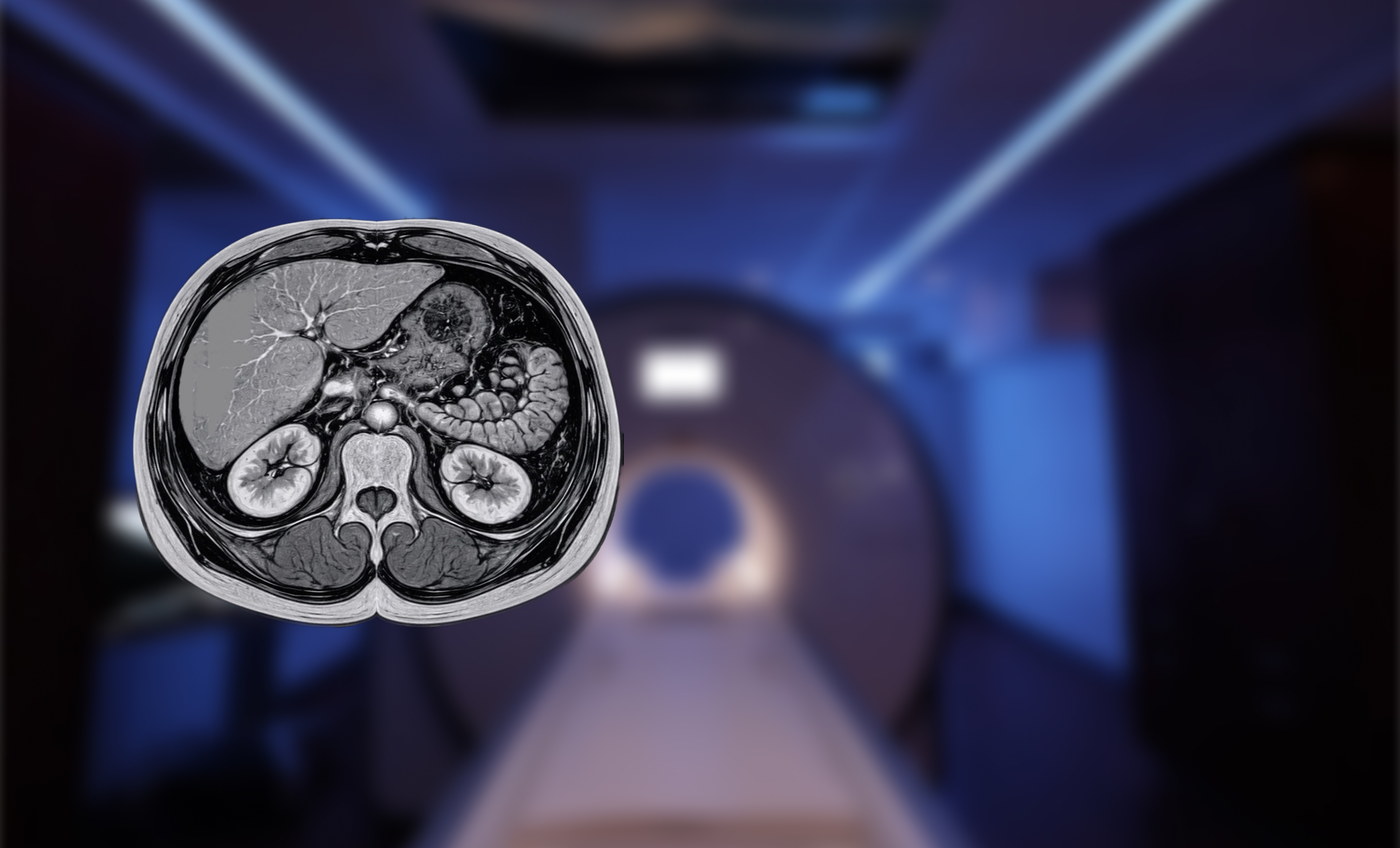

Detect Hidden Heart Risks

Discover how your body sustains effort with science-backed endurance testing to train smarter and recover faster.

Detect Hidden Heart Risks

Discover how your body sustains effort with science-backed endurance testing to train smarter and recover faster.

Detect Hidden Heart Risks

Discover how your body sustains effort with science-backed endurance testing to train smarter and recover faster.

What are Visceral Fat?

What are Visceral Fat?

Liver fat refers to the accumulation of triglycerides within liver cells. In healthy physiology, the liver contains minimal fat. When fat exceeds normal thresholds, it indicates fatty liver, medically termed steatosis.


Excess liver fat disrupts metabolic function. It is strongly linked to insulin resistance, type 2 diabetes, dyslipidaemia, systemic inflammation, and increased cardiovascular risk. Progression can lead to steatohepatitis, fibrosis, cirrhosis, and liver failure.
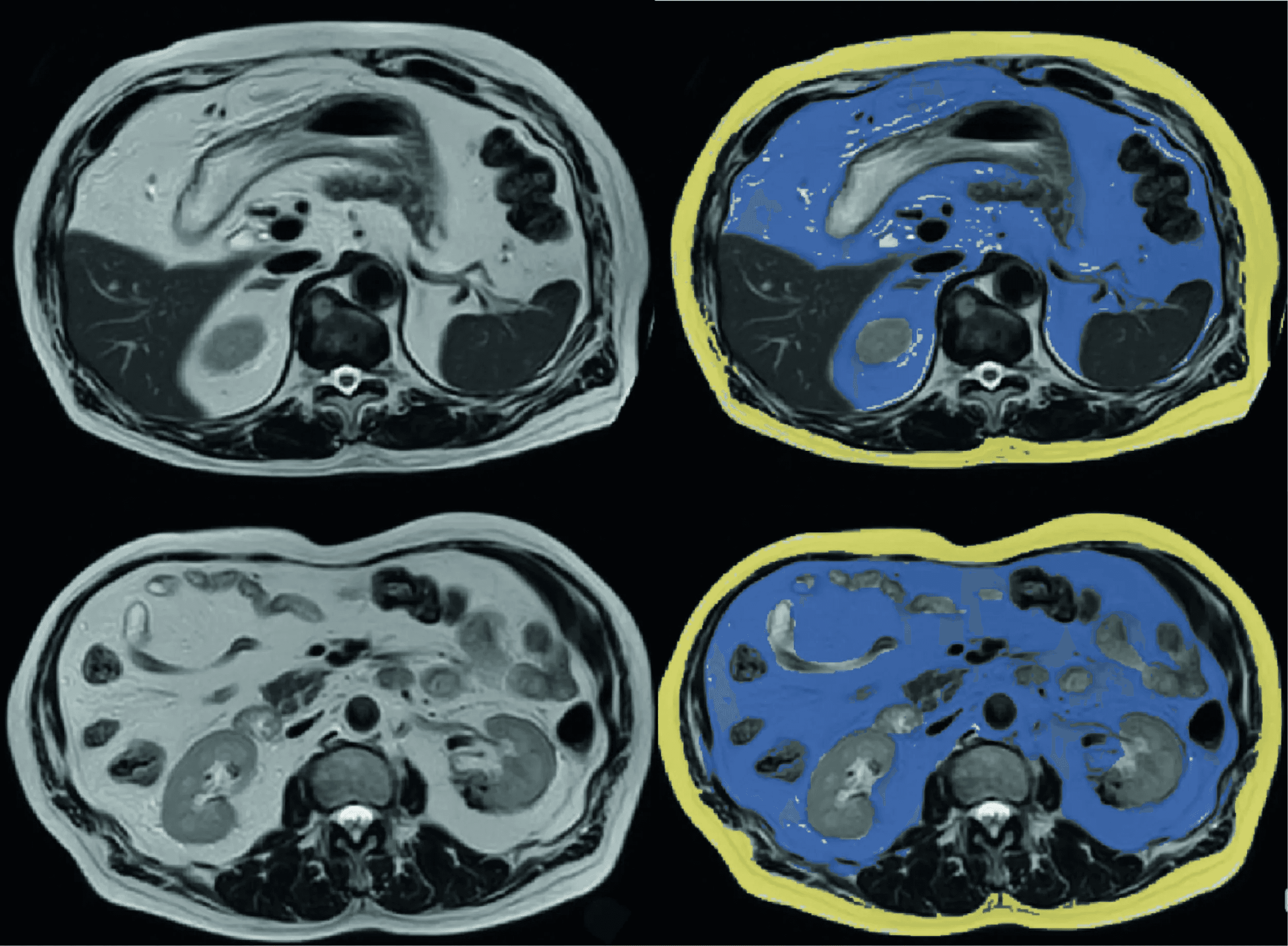
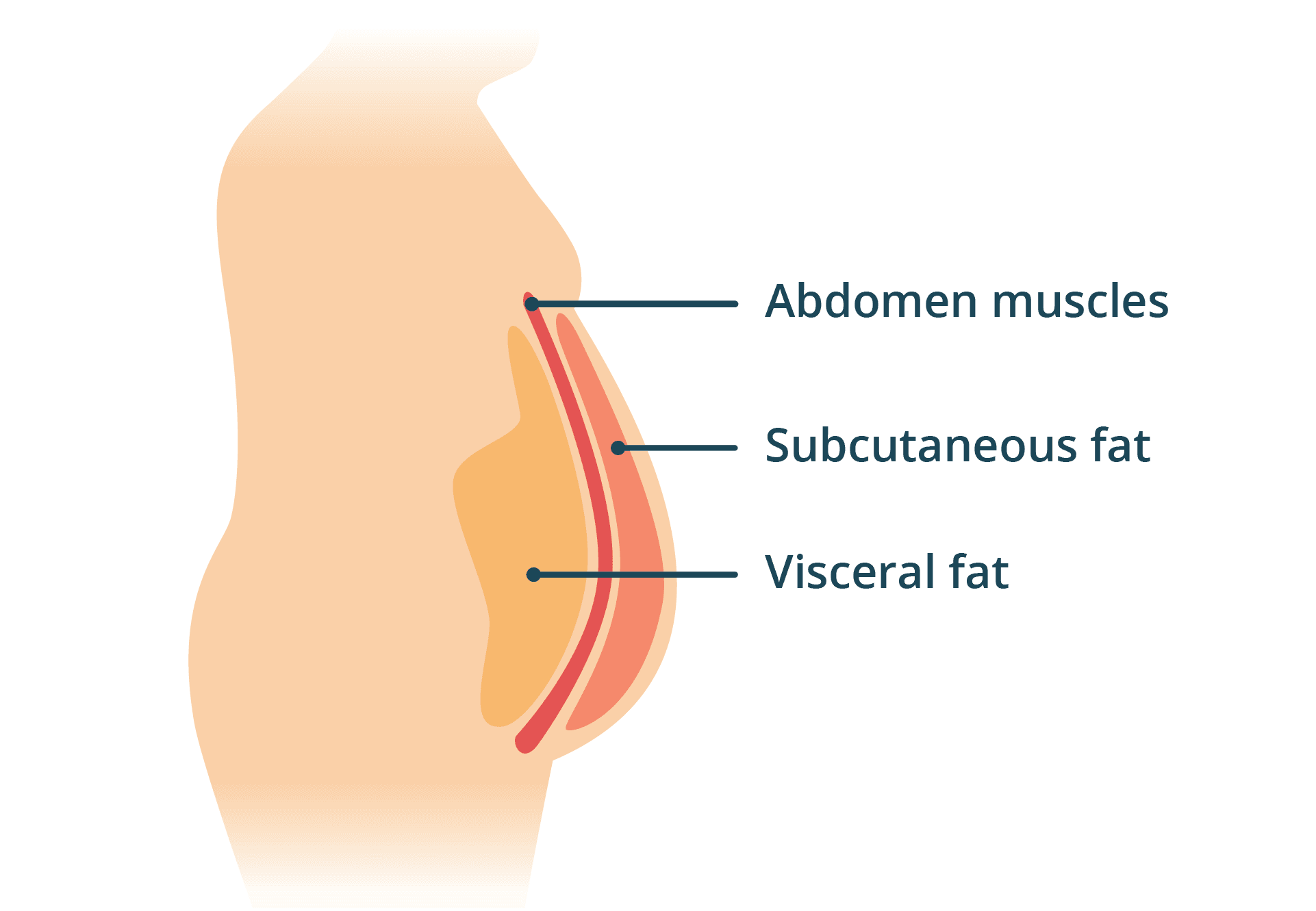
a gloved hand holding a test tube filled with liquid

Metrics Behind Your Health

Metrics Behind Your Health

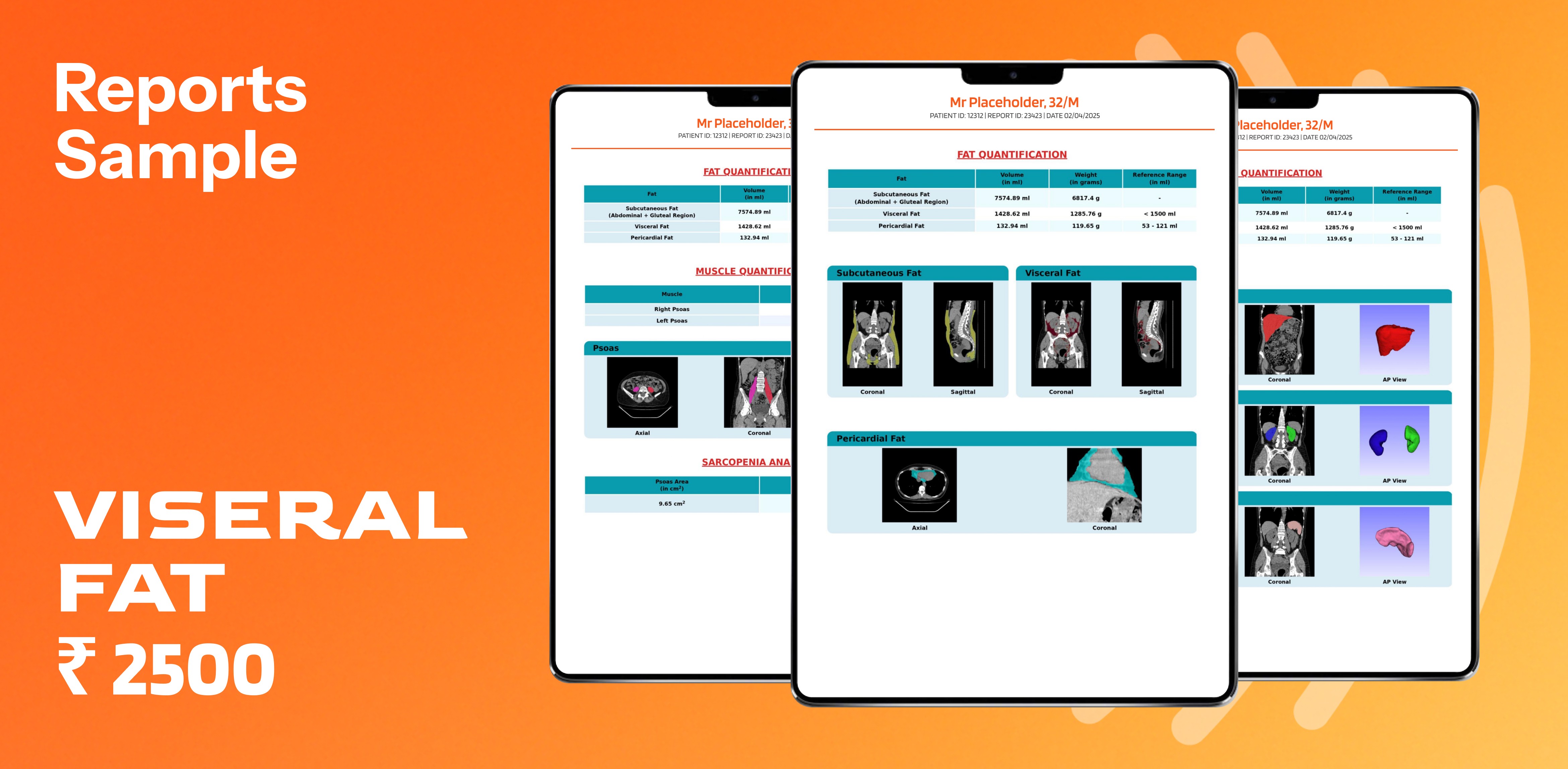
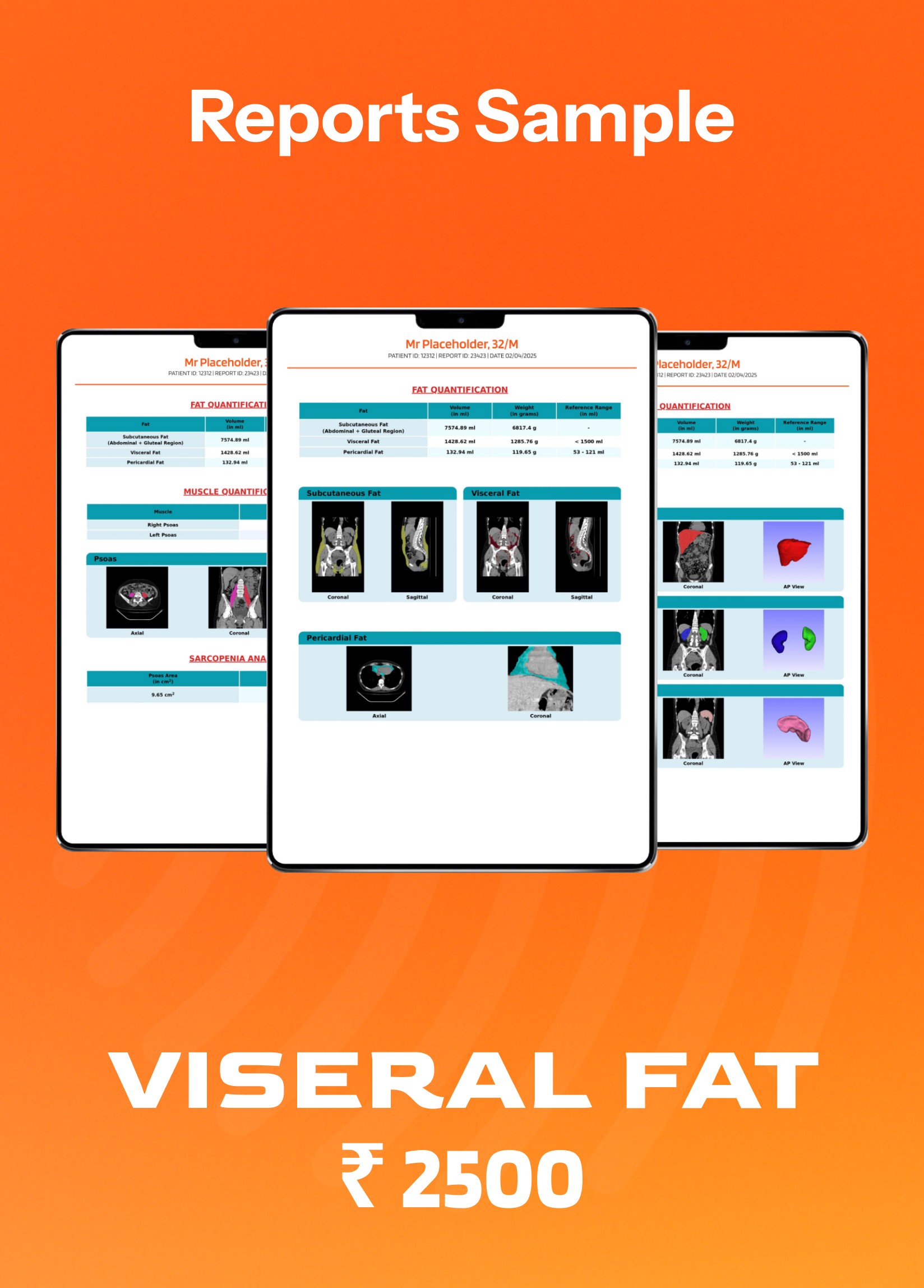
Visceral Fat Volume – Measures total harmful fat around organs.


Visceral to Subcutaneous Fat Ratio – Compares deep fat to surface fat, highlighting metabolic risk.


Fat Distribution Patterns – Shows how fat is spread across organs and regions for precise risk assessment.
a gloved hand holding a test tube filled with liquid

Learn more

Frequently

asked questions

Frequently

asked questions

What is visceral fat?

What is visceral fat?

Why is visceral fat considered dangerous?

Why is visceral fat considered dangerous?

How is visceral fat measured?

How is visceral fat measured?

Can someone with a normal weight have high visceral fat?

Can someone with a normal weight have high visceral fat?

Can visceral fat be reduced?

Can visceral fat be reduced?