
Measure Postural Control, Coordination, and fall risk

Evaluates how effectively your body maintains posture, controls movement, and responds to shifts in position.

Measure Postural Control, Coordination, and fall risk

Evaluates how effectively your body maintains posture, controls movement, and responds to shifts in position.

Measure Postural Control, Coordination, and fall risk

Evaluates how effectively your body maintains posture, controls movement, and responds to shifts in position.

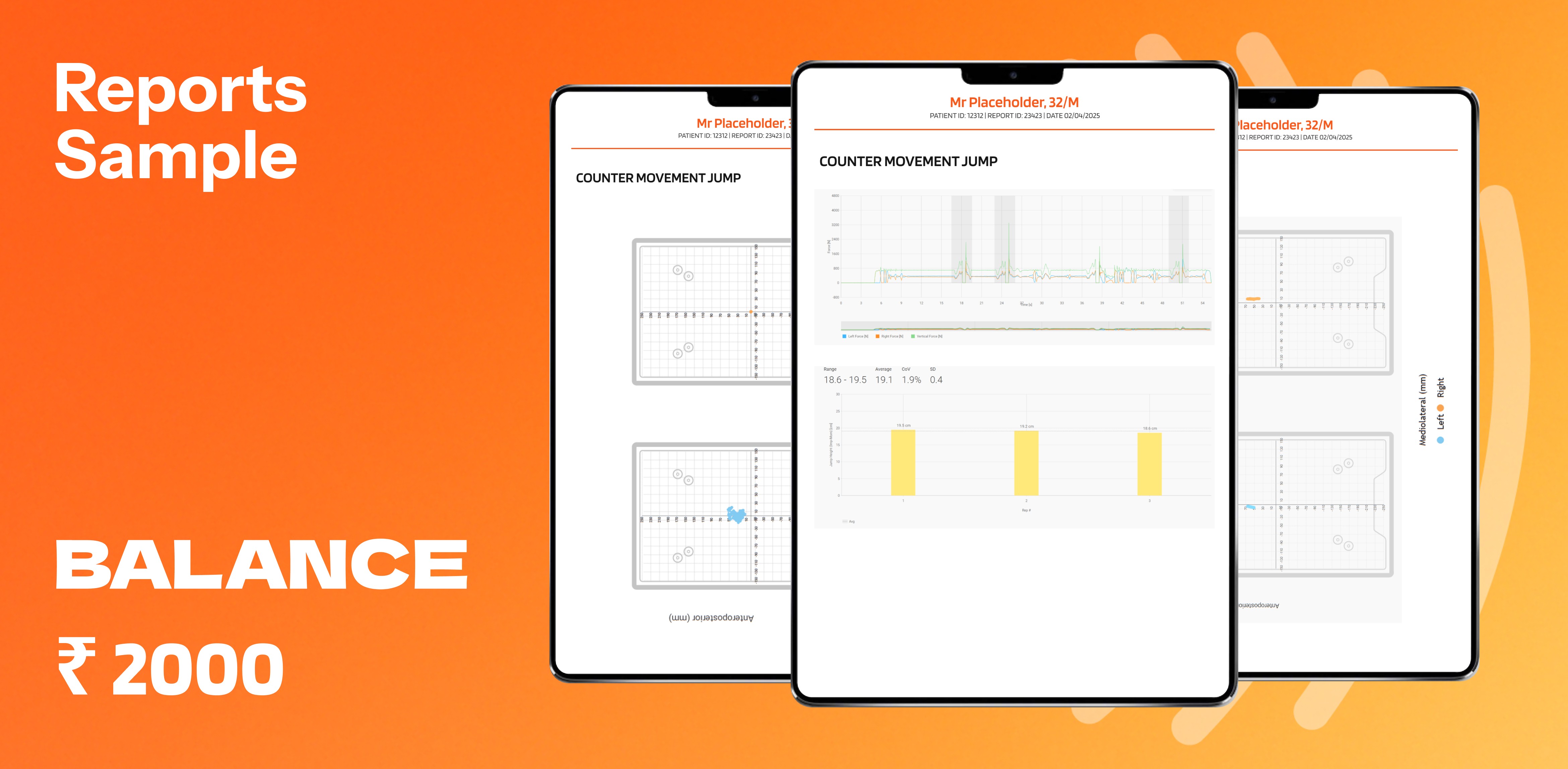
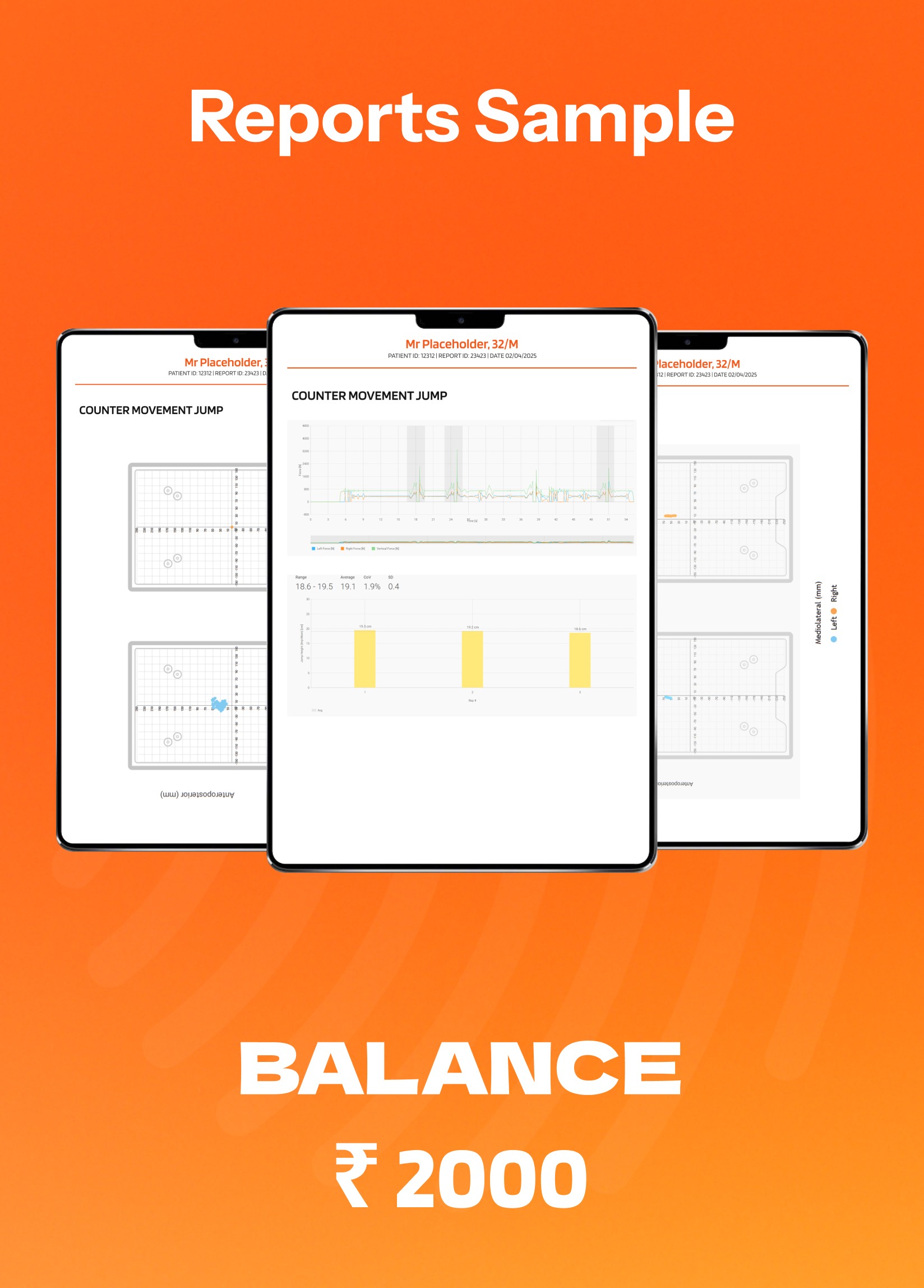
This analysis identifies instability, asymmetries, delayed reflex responses, and sensory integration deficits that may increase injury or fall risk. Balance performance is a critical indicator of neurological function, musculoskeletal integrity, and healthy ageing.

This analysis identifies instability, asymmetries, delayed reflex responses, and sensory integration deficits that may increase injury or fall risk. Balance performance is a critical indicator of neurological function, musculoskeletal integrity, and healthy ageing.

This analysis identifies instability, asymmetries, delayed reflex responses, and sensory integration deficits that may increase injury or fall risk. Balance performance is a critical indicator of neurological function, musculoskeletal integrity, and healthy ageing.

What is Balance Assessment?

What is Balance Assessment?

It is a clinical evaluation of your body’s ability to maintain stability during standing, movement, and directional changes. It measures how efficiently your nervous system, inner ear, vision, and musculoskeletal system work together to control posture.
a gloved hand holding a test tube filled with liquid

Core Metrics

Core Metrics

1. Postural Sway
Measures the degree of body movement while standing still. Excessive sway reflects reduced stability and impaired neuromuscular control.

2. Center of Pressure Control
Tracks how effectively you maintain weight distribution over your base of support. It reveals asymmetry and instability patterns.

3. Weight Distribution Symmetry
Assesses left to right and front to back load balance. Imbalances indicate compensation, weakness, or structural deviation.

4. Reaction Time
Evaluates how quickly the body responds to controlled perturbations or directional changes. Slower responses increase fall and injury risk.

5. Dynamic Balance Control
Measures stability during movement rather than static standing. Critical for athletic performance, coordination, and real world mobility.
a gloved hand holding a test tube filled with liquid

Learn more

Frequently

asked questions

Frequently

asked questions

What is a Balance Assessment?

What is a Balance Assessment?

Why is balance important for health?

Why is balance important for health?

Who should undergo a Balance Assessment?

Who should undergo a Balance Assessment?

What can the test detect?

What can the test detect?

How are the results used?

How are the results used?